The Front Royal/Warren County Tree Stewards are so excited to continue our annual Arbor Day Tree Giveaway at Lone Pine Day on Sunday, April 26, 2026, at 10:00 am at John Marlow Plaza (Downtown Gazebo Area) in Front Royal.
There will be a total of 500 native trees and shrubs, with one per household. These trees go fast, so be sure to get there early.
Our goal with this Tree Giveaway is to improve the canopy in Front Royal and Warren County and to increase the native plants in our community forest. Native plants are important because they are adapted to our area, provide biodiversity, food, and habitat for our local and migratory pollinators and wildlife, and they usually require less watering once established.
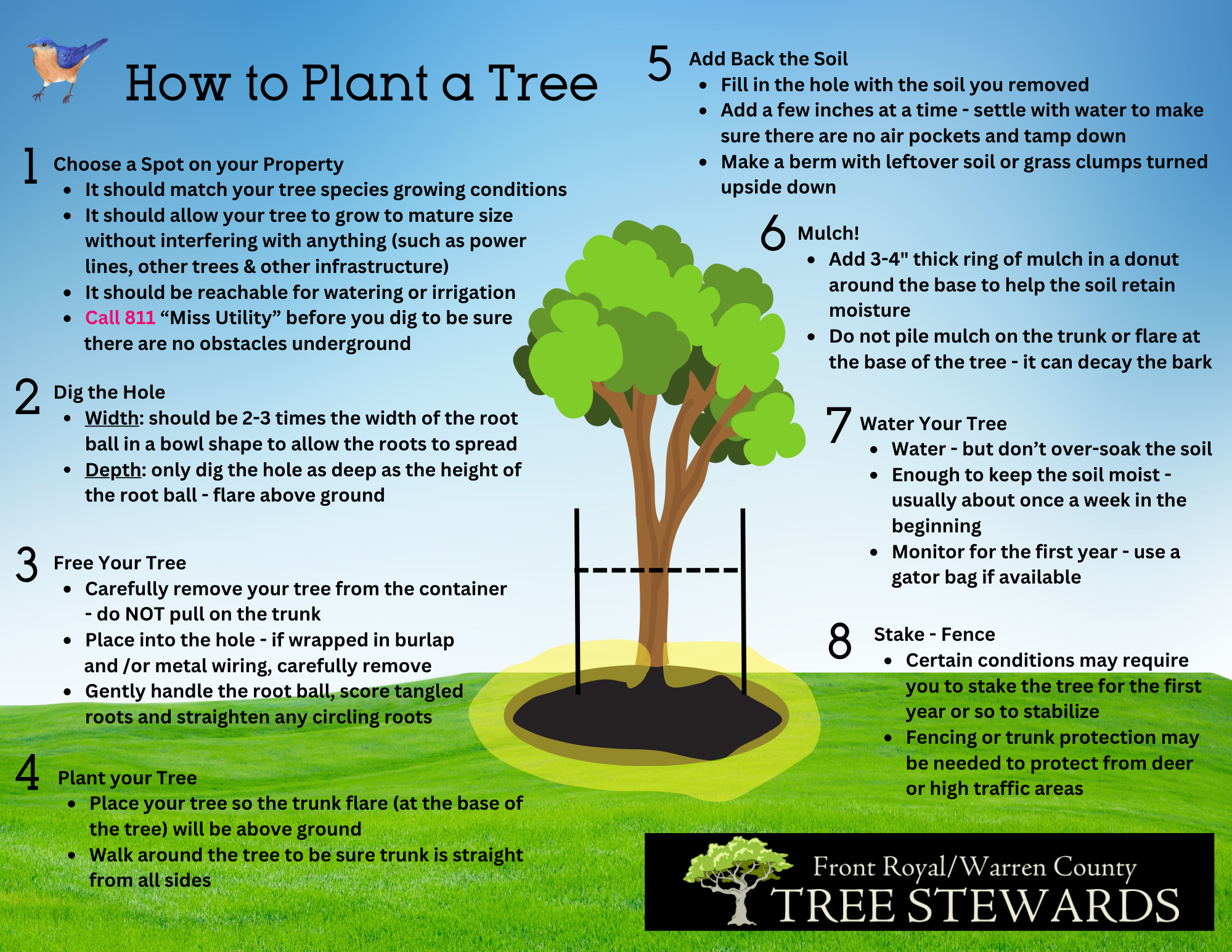
Click here to learn How to Plant a Tree
2026 Trees and Shrubs available in the Tree Giveaway
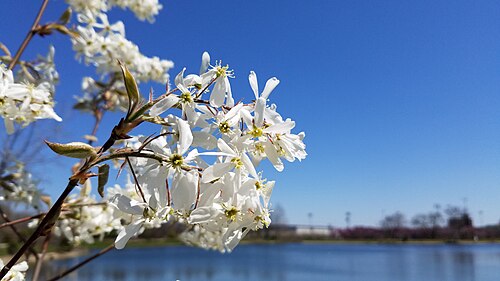
Allegheny Serviceberry (Amelanchier laevis) – This multi-trunked deciduous tree or tall shrub produces slightly fragrant, star-shaped white flowers in showy clusters in the early spring. This tree will bear small, red to deep purple berries that are edible and similar in taste and appearance to blueberries.
Height: 25 feet | Spread 15 feet | Full Sun/Partial Shade Tolerant
 American Holly (Ilex opaca) “Satyr Hill” – Considered by the American Holly Society to be one of the best female forms, for both foliage and fruit. The dark olive-green leaves are somewhat flatter than most opacas, and ‘Satyr Hill’ produces abundant red fruit from early October through the winter. Berries provide winter interest, high quality food, shelter and nesting habitat for birds. Height: 30 feet | Spread 20 feet | Full Sun/Partial Shade Tolerant | Deer Resistant
 Arrowwood Viburnum (Viburnum dentatum) – Arrowwood Viburnum is a shrub with white flowers appearing in May and June, followed by stunning blue fruit in summer. Good bronze fall color. It is also salt and wet site tolerant. Important food source for migrating birds. Deciduous. Native Americans used the young stems to make arrow shafts. Height: 8 feet | Spread 5 feet | Full Sun/Partial Shade Tolerant | Deer Resistant
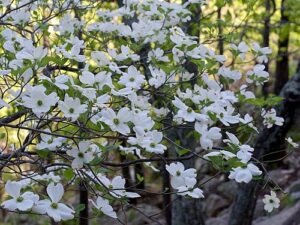 Flowering Dogwood (Cornus florida) – Arguably one of the most beautiful of the native American flowering trees. It is the state tree of Virginia! It blooms in early spring shortly after, but usually overlapping, the bloom period of the redbuds. The true dogwood flowers are actually tiny, yellowish-green button-like clusters. However, each flower cluster is surrounded by four white, petal-like bracts which open flat, giving the appearance of a single, large flower. Oval, dark green leaves turn attractive shades of red in fall. Bright red fruits are bitter and inedible to humans (some authors say poisonous) but are loved by birds. Height: 15 feet | Spread 15 feet | Full Sun/Partial Shade Tolerant
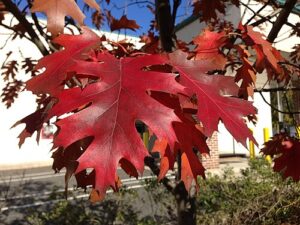 Northern Red Oak (Quercus rubra) – A medium-sized, deciduous tree with dark, lustrous green leaves (grayish-white beneath) with toothed lobes that are sharply pointed at the tips. Leaves turn brownish-red in autumn. Under optimal conditions and full sun, northern red oak is fast-growing, and a 10-year-old tree can be 16–20 feet tall. Northern red oak is easy to recognize by its bark, which features ridges with shiny stripes down the center. Trees may live up to 400 years; a living example of 326 years was noted in 2001.
Height: 50 feet | Spread 50 feet | Full Sun
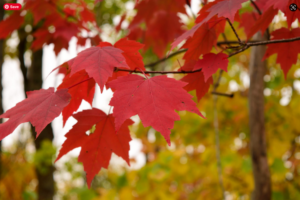 Red Maple (Acer rubrum) – A beautiful, fast-growing, deciduous tree known for its stunning seasonal color and adaptability. Red Maple supports a remarkably diverse array of wildlife, including early spring flowers which provide a valuable food source for bees and other pollinators after winter dormancy, and seeds, known as samaras, which provide food for squirrels, chipmunks, and birds.
Height: 40 feet | Spread 30 feet | Full Sun/Partial Shade Tolerant
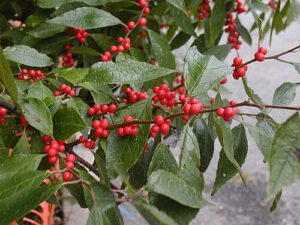 Winterberry (Ilex verticillata) – A female holly and a deciduous shrub known for its dark green leaves and bright red berries that persist through the entire winter into spring. A slow-growing shrub, winterberry holly tolerates all types of conditions except extreme dryness and grows best in wetland areas. This shrub prefers full sunlight, puts up with poorly drained acidic soil, and thrives in just about any temperature. Winterberry holly is toxic to people and animals. Hollies are dioecious so it is best to plant a male within 50 feet of a female for pollination and berry production.
Height 12 feet | Spread 12 feet | Full Sun/Partial Shade Tolerant
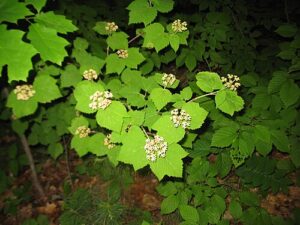 Mapleleaf Viburnum (Viburnum acerifolium) – A densely branched, deciduous shrub with tiny white flowers from spring to later summer. The flowers of the mapleleaf viburnum attract butterflies before turning to red berries that ripen to a blue-black in the summer. Its maple-like leaves turn brilliant reddish-purple to magenta in late fall. The mapleleaf viburnum was used in ethnobotany as a medicinal plant by Native Americans.
Height 6 feet | Spread 4 feet | Partial Shade/Full Sun Tolerant
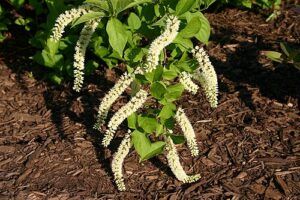 Sweetspire (Itea virginica) – A deciduous shrub with arching stems and dark green, oval-shaped leaves. The shrub grows rounded and produces bottlebrush-looking, droopy, white floral sprays from late spring to mid-summer. In autumn, the leaves turn red, orange, and gold shades. Virginia sweetspire is suitable for erosion control or enticing bees and butterflies to your garden. It also produces edible seeds for birds and is deer-resistant. It is not toxic to humans and animals.
Height 8 feet | Spread 8 feet | Full Sun/Partial Shade Tolerant